The container is the "soul" of modern sea freight. Every year, more than 250 million TEU containers are shipped worldwide. But not all containers are the same — there are more than 20 different container types designed for specific purposes.
In this article, VTM Logistics will explain each container type in detail — from standard sizes 20DC/40DC to specialized types such as Reefer, Flat Rack and Tank — helping you choose the right container for your shipment.
See more articles container import costs to understand the fees clearly.
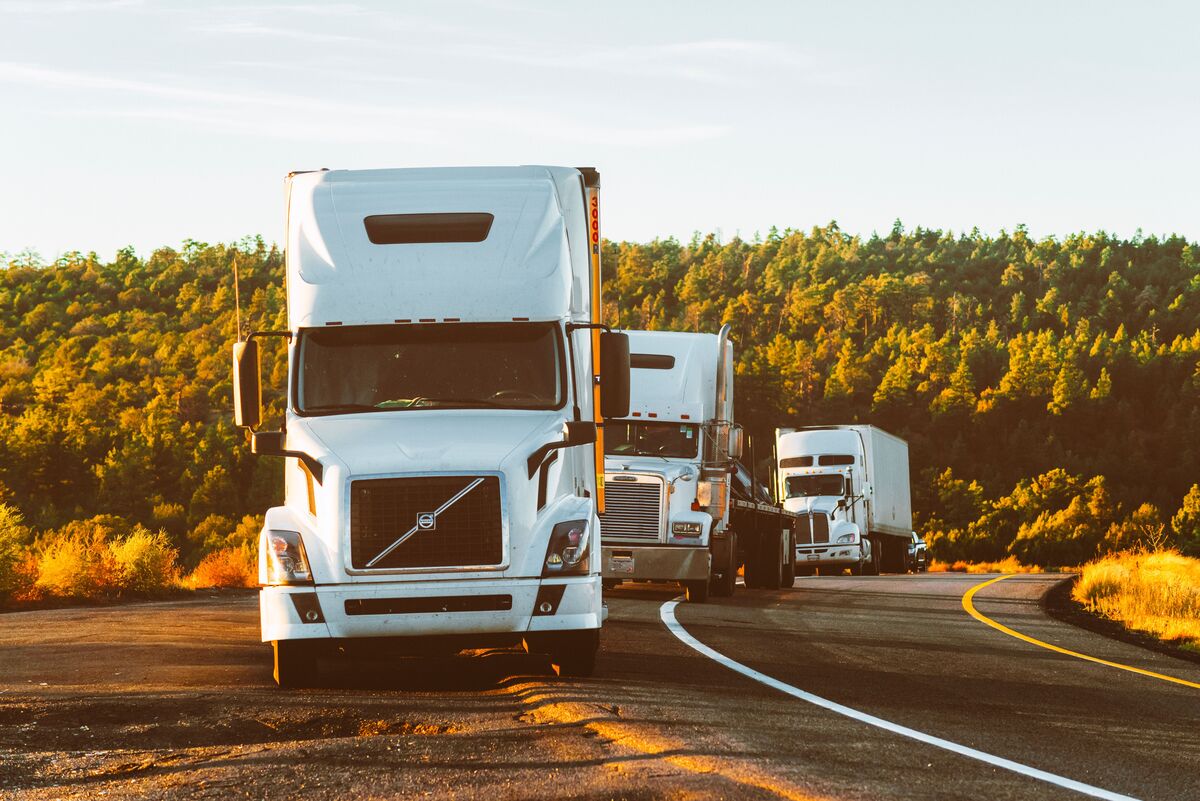
VTM Logistics has a diverse container truck fleet — from 20DC and 40DC to 40HC. For regular dry cargo, 40HC is the optimal choice thanks to its large volume. Oversized cargo requires Open Top or Flat Rack containers — VTM has experience obtaining permits and arranging transport.
This is the most common container type, accounting for about 70-80% of all containers worldwide. It is fully enclosed and carries regular dry cargo that does not require temperature control.
| Type | External Dimensions (L×W×H) | Internal Dimensions | Volume | Max Payload |
|---|---|---|---|---|
| 20'DC | 6.06×2.44×2.59m | 5.90×2.35×2.39m | ~33 CBM (actual 28-30) | ~28.2 tons |
| 40'DC | 12.19×2.44×2.59m | 12.03×2.35×2.39m | ~67 CBM (actual 58-60) | ~28.8 tons |
When to use 20'DC: Heavy cargo, small volume — rice, fertilizer, steel, machinery components (weight > volume).
When to use 40'DC: Light cargo, large volume — cotton, paper, plastics, household goods, furniture (volume > weight).
Practical tip: If your cargo is heavy (such as rice or steel), use 20'DC — each container can carry ~28 tons, regardless of 20 or 40 feet. A 40'DC container has the same payload but double the volume, so it is very wasteful to carry heavy cargo. Always calculate: cargo weight ÷ 28 tons = number of 20' containers needed.
A High Cube container has the same length and width as a standard container, but is 30 cm taller (2.89 m vs. 2.59 m). It offers 10-15 CBM more volume than a regular container.
| Type | External Dimensions (L×W×H) | Internal Dimensions | Volume | Main Applications |
|---|---|---|---|---|
| 40'HC | 12.19×2.44×2.89 m | 12.03×2.35×2.70 m | ~76 CBM (actual 68-72) | Bulky cargo, furniture, large cartons |
| 20'HC | 6.06×2.44×2.89 m | 5.90×2.35×2.70 m | ~37 CBM | Less common; used when 20' cargo requires extra height |
40'HC is the second most common container type after 20'DC, accounting for about 25% of all containers worldwide. Most exports from Vietnam to the EU/US use 40'HC because the cargo is light and high-volume (footwear, garments, wooden furniture).
Reefer containers have an integrated refrigeration unit at the front of the container, maintaining a stable temperature from -25°C to +25°C. The container shell is thickly insulated to maintain temperature.
| Type | Internal Dimensions | Temperature Range | Applications |
|---|---|---|---|
| 20'RF | 5.45×2.29×2.27m (~28 CBM) | -25°C to +25°C | Frozen seafood, meat, ice cream, pharmaceuticals |
| 40'RH | 11.59×2.29×2.56m (~68 CBM) | -25°C to +25°C | Fruits, vegetables, dairy products, chocolate, temperature-sensitive chemicals |
Important notes: Reefer containers require a continuous power supply on board the vessel and at the port. If power is interrupted for more than 4 hours, cargo may be lost. Reefer rental fees are often 2-3 times higher than standard containers, plus plug-in fees at the port.
Open Top containers have a tarpaulin roof that can be pulled back, and the roof frame can be removed. Cargo is loaded from above by crane, then the tarpaulin is pulled shut. Suitable for:
Dimensions: 20'OT (28-30 CBM, ~21 tons) and 40'OT (60-65 CBM, ~26 tons).
Limitations: Less water-resistant than closed containers; a tarpaulin must be securely tied down before transport.
Flat Rack containers have almost no walls — only a load-bearing floor and two collapsible end walls. Used to carry:
Flat Rack containers are commonly referred to as "wall-less containers" or "platform containers". The maximum payload of a 40'FR can reach up to 45 tons, higher than standard containers thanks to a reinforced floor frame.
A tank container consists of a cylindrical stainless steel tank placed inside a standard container frame. Used to transport liquids and liquefied gases:
Capacity: 20' Tank holds 21,000-26,000 liters, payload ~24 tons.
Note: Tank containers must be thoroughly cleaned between carrying different types of cargo. Tanks carrying food require a food-grade certificate.
| Type | Code | Features | Suitable cargo |
|---|---|---|---|
| Ventilated Container | VH | Ventilation holes on walls and floor | Coffee, pepper, cocoa, rice (moisture release required) |
| Box container | BU/BK | Fully sealed, reinforced floor | Wooden furniture, premium furniture, electronics |
| Hanger container | HT | With vertical garment hanging rails along the container | Hanging garments (garment-on-hanger) |
| Side-door container | SD | Both side walls can be opened | Large pallet cargo; loading/unloading requires side access |
| Half-height Container | — | Only 1.3m high (half the height of a standard container) | Heavy bulk cargo: ore, coal, construction materials |
Each container has a code consisting of 11 characters printed on the container body, for example: MSCU 123456 7.
MSCU = MSC, MAEU = Maersk, OOLU = OOCL| Cargo Type | Suitable Container | Reason |
|---|---|---|
| Rice, coffee, pepper | 20'DC or 20'VH | Heavy cargo, requires ventilation |
| Garments, footwear | 40'HC | Light cargo, large volume |
| Wooden furniture | 40'HC or 40'BU | Requires height and shell quality |
| Frozen seafood | 20'RF or 40'RH | Requires temperature control |
| Liquid chemicals | 20' Tank | Specialized tank |
| Machinery and Equipment | 20'OT, 40'FR or 40'OT | Depending on size and weight |
| Hanging Garments | 40'HT | With dedicated hanging rails |
| Steel coils | 20'DC (reinforced floor) | Very heavy cargo; requires secure fastening |
How do 20' and 40' containers differ in TEU?
1 TEU (Twenty-foot Equivalent Unit) = 1 container of 20 feet. 1 container 40' = 2 TEU. The world's largest container ship (MSC Irina) can carry 24,346 TEU.
Can 40'HC containers be stacked?
Yes. 40'HC containers have a load-bearing frame structure equivalent to that of 40'DC containers. On board, containers can be stacked 8-10 tiers in the hold and 4-5 tiers on deck.
Are rental fees for special container types expensive?
Special containers typically have rental fees 20-100% higher than standard containers. Reefer is the most expensive (2-3 times higher), Flat Rack and Open Top are 1.5-2 times higher. Tank containers are usually charged by liter or per trip.
How do you know a container is still good for cargo?
Inspect the container before loading (container survey): check that walls are not punctured, door gaskets are still sealed, floor is not rotten, and there are no strange odors. Food cargo requires clean containers and a hygiene certificate.
Choosing the wrong container type is a common mistake for new import-export businesses. 20DC containers are not suitable for bulky cargo, while 40HC containers have excess capacity for light cargo. VTM Logistics advises on choosing the right container for each type of cargo.
Join us now to keep up with the news and receive our latest offers!
These sources explain the rules discussed above. Check the current requirements for your shipment; examples on this page do not replace the applicable regulations or contract terms.